
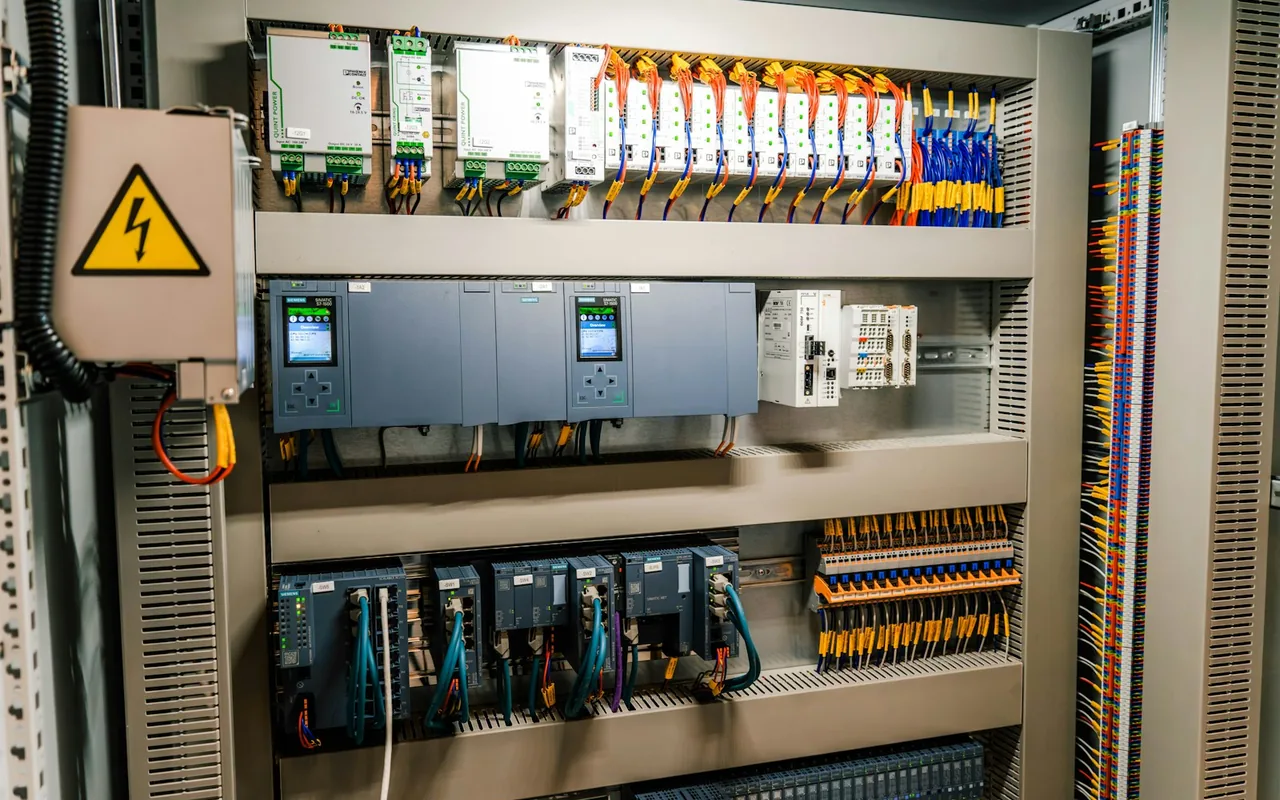
From mechanical design to the right product list
For a new machine, the cycle sequence, number of axes, positioning accuracy and load information determine the automation architecture. We clarify these requirements with the mechanical design team and select motors, drives, sensors and control components together.
We complete the product list with power supplies, connectors and field wiring as well as the main devices. Panel layout and functions planned for future expansion are also included in the initial assessment.
- Input and output list and communication architecture
- Matching axis, load and cycle requirements
Developing electrical drawings and software together
A sensor’s function in the field, its address in the electrical drawings and its representation in software should be based on the same functional definition. We establish this relationship to keep the information used during panel assembly and commissioning consistent.
The automatic cycle, manual movements, restart after a stop and fault descriptions are prepared according to the machine’s operating logic. Access levels for settings and parameter limits on the operator screen are defined within the application scope.
- PLC and HMI software aligned with functional definitions
- Technical documents for panel and field connections
A structure transferable from the first machine to later builds
During initial commissioning, individual movements, cycle transitions and different product scenarios are checked. Software or component revisions arising from mechanical changes are recorded.
At machine handover, software and parameter backups, the component list and connection information are prepared within the agreed scope. These records provide a reference for subsequent builds of the same machine; compatibility is reassessed when different hardware is used.
- Tracking changes observed during machine tests
- Version information for maintenance and service
Frequently asked questions
Should automation work begin only after mechanical design is finished?
It is useful to begin once the functions and basic mechanical approach are clear. Early assessment of motor placement, sensor positions, cable routes and panel space allows design decisions to be made together.
Can product supply or software support be requested on its own?
The requirement can be defined separately as product selection, supply, design, software or commissioning. The work boundaries and technical information to be shared with other teams are determined at the outset.
Can software from an existing machine be transferred to a new one?
Hardware, software access and usage permissions should be examined. Even if the mechanical arrangement and cycle appear identical, sensors, drives and control addresses are compared to determine the adaptation scope.